
Early Detection Through
Screening And Diagnostics
The Key To Overcoming This 'Silent Disease'
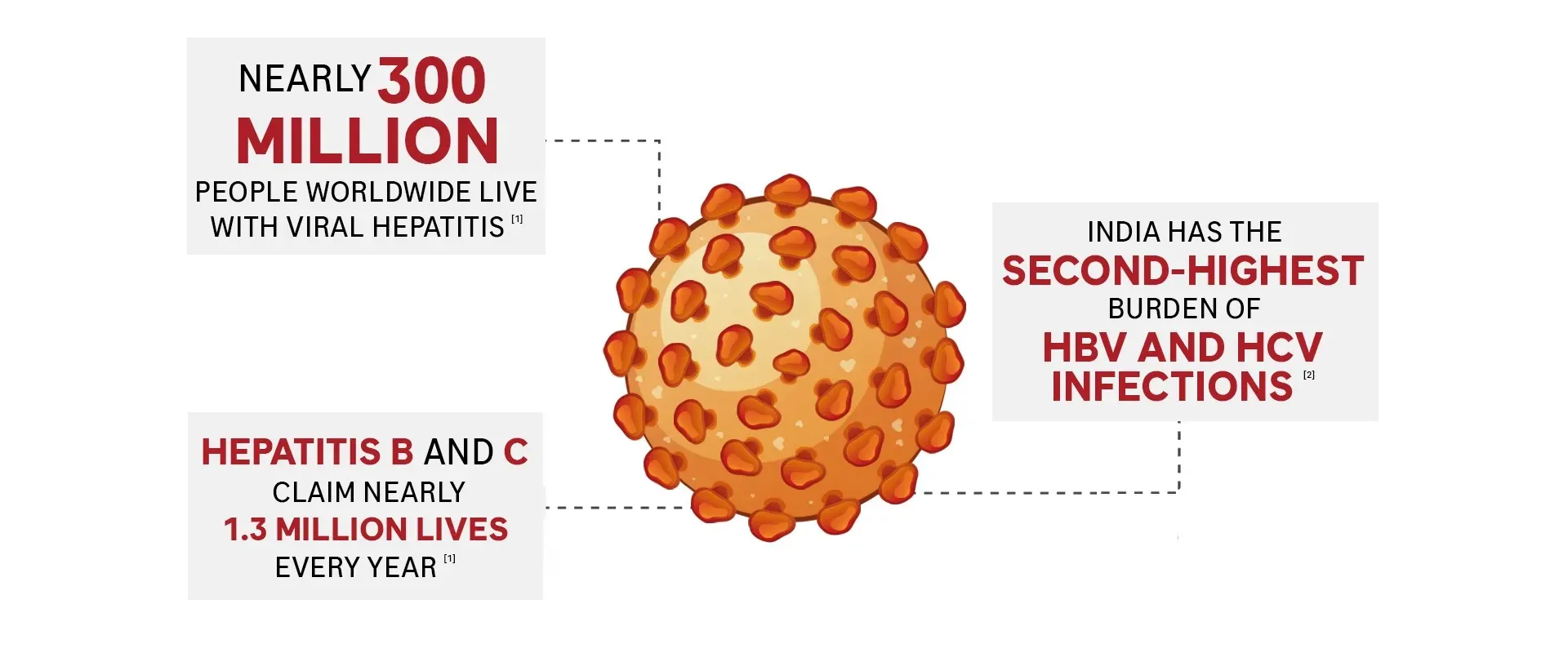
Understand Hepatitis
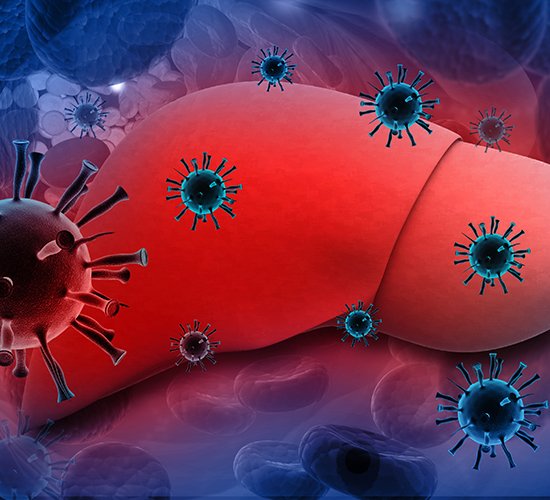
Hepatitis is the term used to describe inflammation of the liver, often caused by viral infections, excessive alcohol consumption, certain medications, or exposure to toxins[3].
- Hepatitis A is most commonly transmitted by consuming food or water contaminated by faeces from an infected person.[3]
- Hepatitis B is transmitted through contact with infectious body fluids, unsafe sex, or sharing razors, etc. with an infected person.[3]
- Hepatitis C is transmitted through direct contact with infected body fluids, typically through injection drug use and sexual contact.[3]
- Hepatitis D is a rare form of Hepatitis that only occurs in conjunction with Hepatitis B infection [3].
- Hepatitis E is a waterborne disease caused by the Hepatitis E virus (HEV) [3].
Symptoms
Many people with viral hepatitis experience no symptoms and may be unaware that they are infected. When symptoms occur during an acute infection, they can develop anywhere from 2 weeks to 6 months after exposure. Symptoms of chronic viral hepatitis may take decades to appear and are generally similar to those seen in acute infection [4]. The incubation period for different types of hepatitis varies as follows:
- Hepatitis A: Approximately 4 weeks[5]
- Hepatitis B: Approximately 12 weeks[5]
- Hepatitis C: Approximately 8 weeks[5]
- Hepatitis D: Approximately 13 weeks[5]
- Hepatitis E: Approximately 2 to 10 weeks[5]
The symptoms include [6], [7]:

Fever

Jaundice

Abdominal Pain

Dark Urine

Joint Pain

Loss of Appetite

Fatigue

Muscle Pain
The acute phase is usually not dangerous, but in some cases, it can lead to acute liver failure and even death. It may also progress to a chronic infection, particularly in Hepatitis B and C[8].
Over time, chronic hepatitis can cause:[8]

Liver Failure

Fatigue and malaise

Confusion

Change in sense of smell or taste
Diagnosis
The symptoms of viral hepatitis vary from person to person and depend on the type of hepatitis virus. Some people have no symptoms, while others experience only mild illness. In rare cases, it can lead to rapid and severe liver failure[9].
Diagnosis of hepatitis typically involves a physical examination, which may reveal an enlarged or swollen liver, along with blood tests to assess liver enzyme levels and detect the presence of hepatitis viruses. Imaging tests such as a liver ultrasound may be used to identify changes in the liver, while a liver biopsy may be recommended when other tests are inconclusive to confirm inflammation and determine the extent of liver damage.[10]
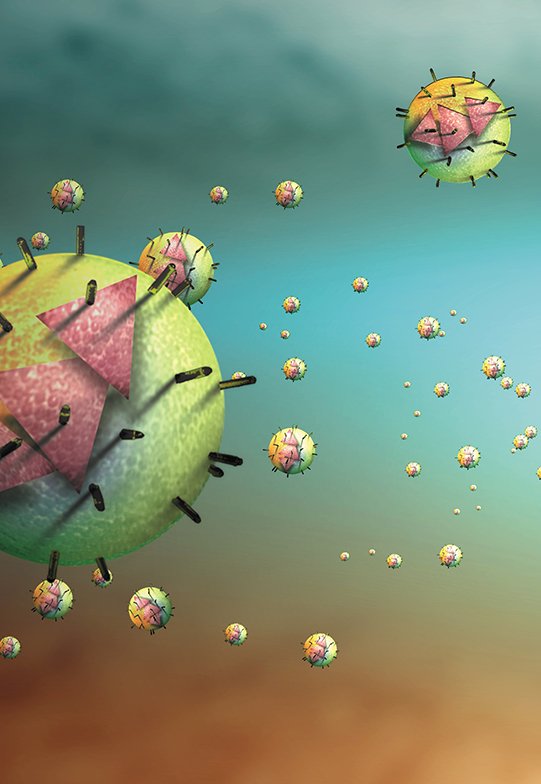
Prevention[11]
Prevention is the most effective approach against the disease. Prevention of Hepatitis requires improvements in sanitation, food safety, immunization, blood safety, and reducing the risk of exposure to the virus in health-care settings and in higher-risk populations
The spread of Hepatitis can be reduced by:
- Getting vaccinated against hepatitis B
- Ensuring safe injections, blood transfusions, and medical procedures
- Preventing mother-to-child transmission of hepatitis B
- Seeking timely treatment for chronic hepatitis B or C
- Maintaining good sanitation and hygiene
- Consuming safe food and drinking water
- Taking precautions to prevent sexual transmission
- Consuming safe food and clean drinking water
Screening Of Donated Blood
Hepatitis screening involves testing of donated blood for antigens and/or antibodies to determine whether the donated blood is infected with viral Hepatitis. Advance screening involves testing for viral DNA or RNA in blood. Globally, however, there are significant variations in the extent to which donated blood is screened. [12]
In India, ensuring a safe and adequate blood supply is a national priority. Following a landmark Supreme Court judgment in 1996 banning professional blood donation, the National Blood Transfusion Council (NBTC) and State Blood Transfusion Councils (SBTCs) were established to regulate blood transfusion services and blood banks. Under the National Blood Policy (2002), all donated blood is mandatorily screened for five transfusion-transmissible infections (TTIs) including HIV, hepatitis B, hepatitis C, syphilis, and malaria, before transfusion to help ensure the safety of blood recipients. [13]
Hepatitis can progress to cirrhosis
Only chronic hepatitis can cause liver cancer
In India, every unit of blood is screened for HBV and HCV

References
1. https://www.cdc.gov/nchhstp/whats-new/world-hepatitis-day-2026.html
2. https://iris.who.int/server/api/core/bitstreams/6f6caedc-37a0-49ee-a02a-df9c3b78ff42/content
3. https://www.who.int/news-room/questions-and-answers/item/hepatitis
4. https://www.cdc.gov/hepatitis/hcp/clinical-overview/index.html
5. https://www.ncbi.nlm.nih.gov/books/NBK554549/
6. https://www.who.int/health-topics/hepatitis#tab=tab_2
7. https://www.niddk.nih.gov/health-information/liver-disease/autoimmune-hepatitis/symptoms-causes
8. https://pmc.ncbi.nlm.nih.gov/articles/PMC1119417/
9. https://www.ncbi.nlm.nih.gov/books/NBK554549/
10. https://www.hopkinsmedicine.org/health/conditions-and-diseases/hepatitis
11. https://www.who.int/teams/global-hiv-hepatitis-and-stis-programmes/hepatitis/prevention